
精準人工關節置換
手術方法由「經驗導向」走向「數據導向」的時代
骨科主治醫師 陳健煜
過去我們常認為,一位優秀的外科醫師,是經由長時間累積的臨床經驗與本能與直覺所養成。然而,在當前醫療環境中,僅依賴經驗與主觀判斷,已難以完全滿足臨床需求。現今醫療所追求的,不再只是「手術做得不錯」,而是期望每一台手術都能穩定、可預期地達到理想結果。
從本質來看,傳統人工關節手術仍存在數項變數。
首先是精準度的問題。一般的手術因為靠醫師目測及手感可能會有20~30%尺寸、角度、擺位上的偏差。角度的偏差有時可能達到5-7°以上。
其次,軟組織的處理高度依賴醫師的個人經驗。關節韌帶的平衡多數仍仰賴術者的手感與主觀判斷,機器手臂手術則可以在術中得到準確數據的回饋而避免偏差。
當偏差值(outliers)大於 ±5° 常常會產生不良的臨床結果,造成日後需再次進行翻修手術的風險。
因此,臨床真正需要關注的,不僅是整體平均表現,更重要的是如何有效降低這些關鍵性的偏差。
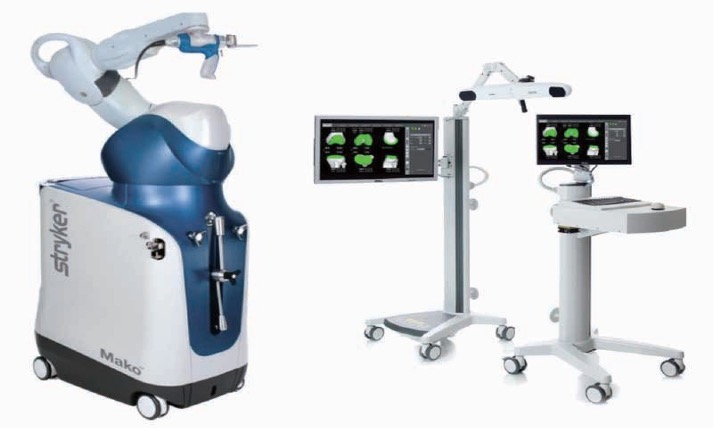
MAKO Robotic-Arm Assisted Arthroplasty
精準醫學通常建立於三個核心基礎:可測量(measurable)、可預測(predictable)以及可重現(reproducible)。
MAKO機器手臂與電腦導航的導入,使精準醫學得以逐步落實於人工關節手術中。
在技術應用上,電腦導航(Computer Navigation)主要透過紅外線或影像追蹤系統輔助定位,仍以醫師手動操作為主;而機器手臂系統則進一步結合術前3D建模與術中安全控制機制,由醫師依據數據規劃並操作系統完成精細修整。
其核心特點可歸納為三大面向:
3D術前計畫
提供植入物正確擺位、合適尺寸與理想角度的規劃依據
動態關節平衡
術中即時回饋關節壓力與活動狀態,使軟組織平衡得以量化
安全手術界限(Safe-zone boundary)
限制骨切範圍,避免傷及周邊軟組織(如神經與血管)
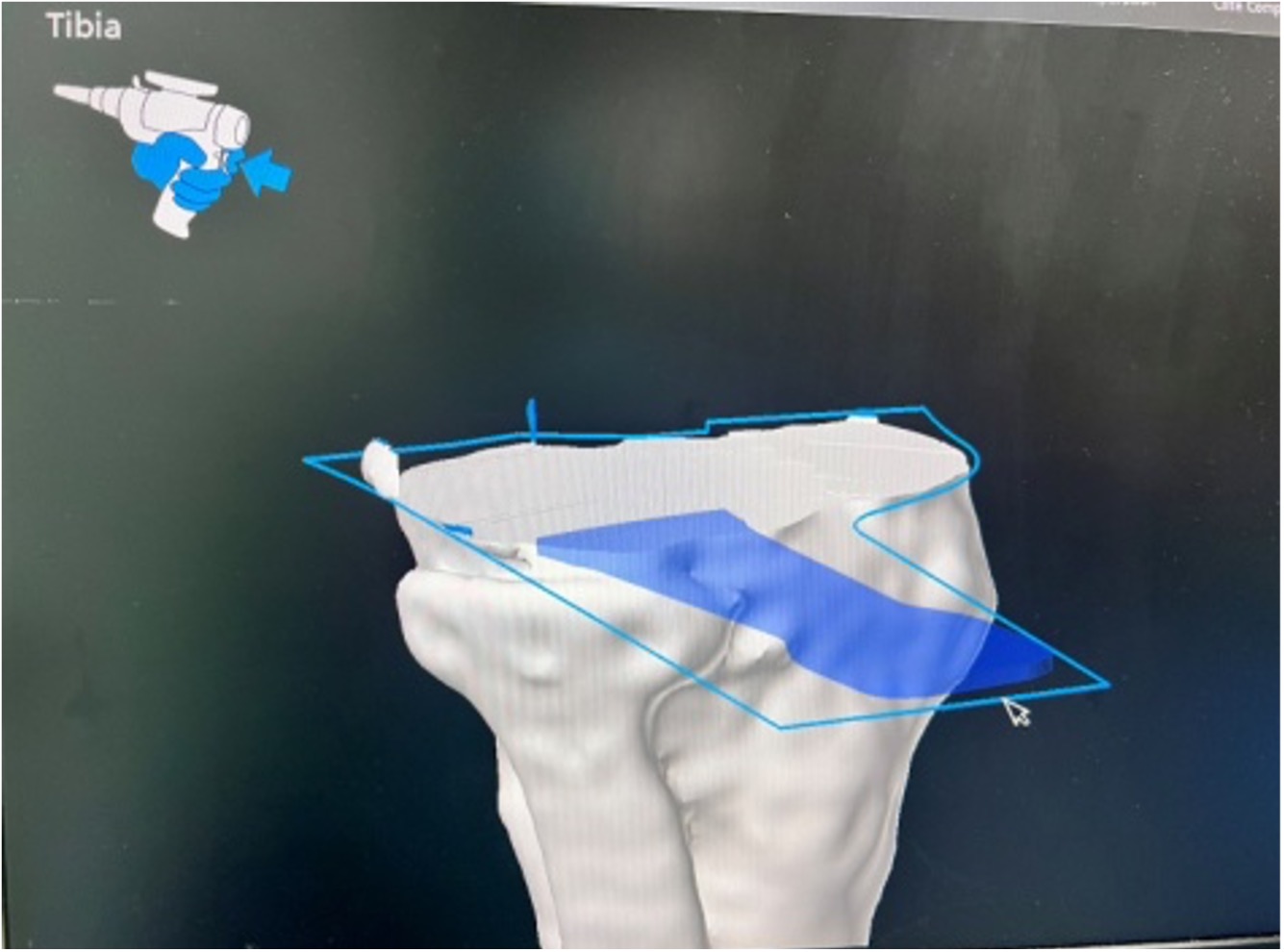
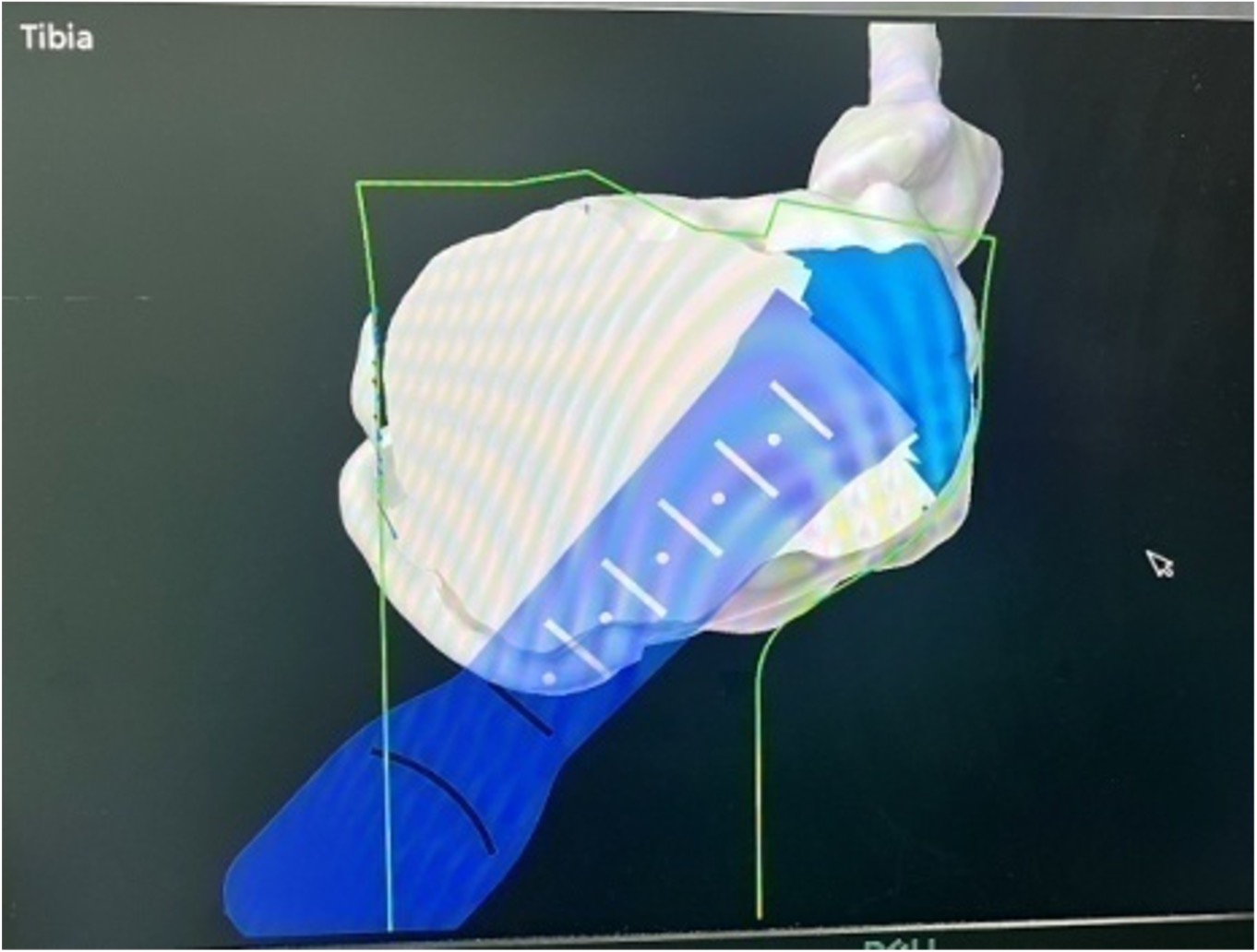
術前階段,透過影像建立病人的三維模型,相當於建立一個「數位分身」,使醫師得以預先模擬植入物選擇、擺位與關節平衡,完成個人化手術規劃。
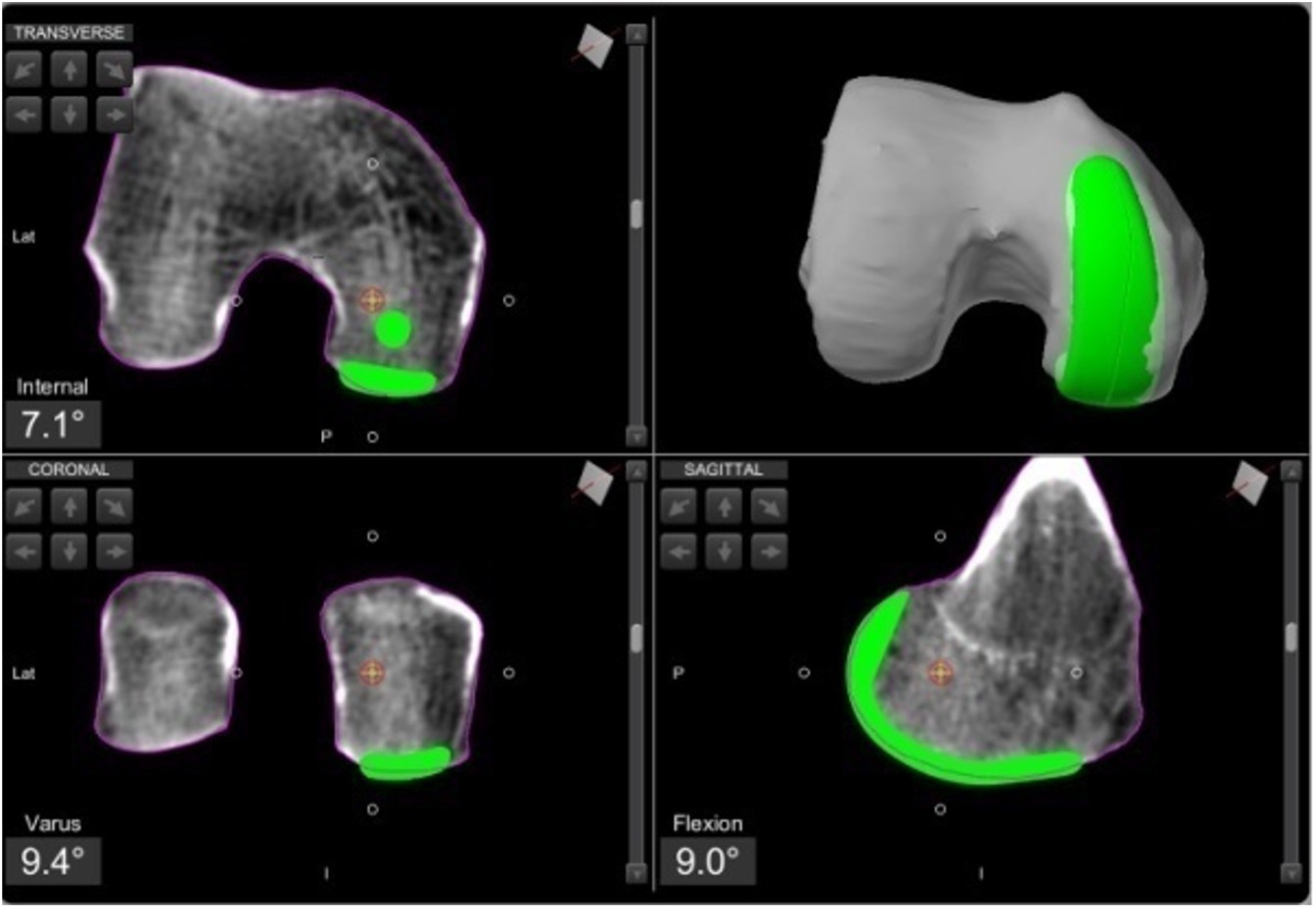
術中虛擬部份膝人工關節擺位
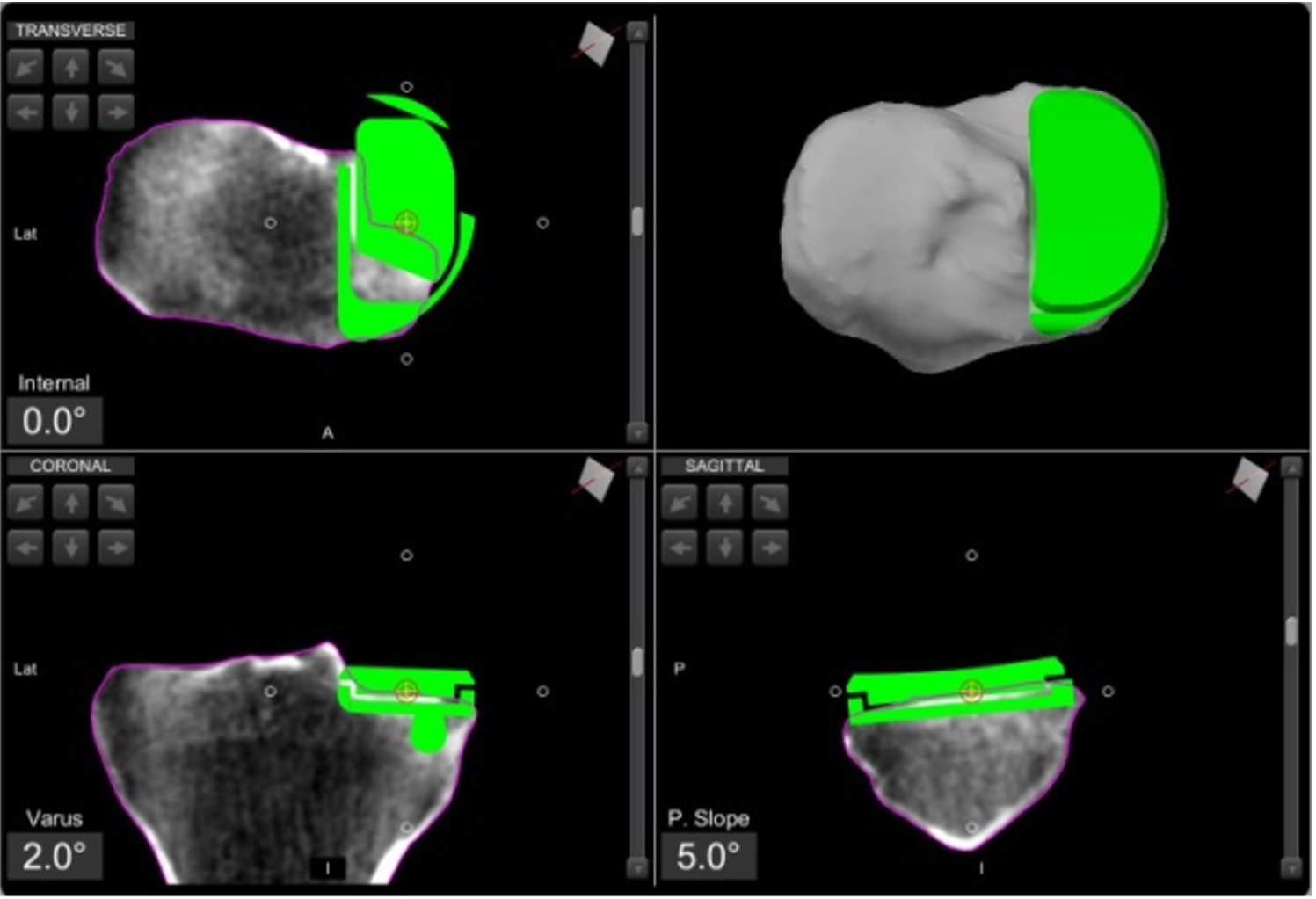
提供術中動態微調達成最佳擺位
在術中階段,系統提供即時數據回饋,包括關節活動軌跡、擺位調整及軟組織張力評估,使手術決策由過去偏向主觀經驗,轉為客觀數據導向。
此外,安全邊界(haptic boundary)控制技術在骨切過程中提供精確限制,避免超出預設範圍,其目的並非取代醫師,而是在關鍵步驟中提供安全防護,降低操作誤差。
理想的人工關節擺位不僅是術中數據指標,更直接影響植入物磨損、鬆動、關節穩定性,甚至脫位風險(尤其是全髖關節置換,在國外有些關節中心MAKO的應用已經標準化成為常規)。
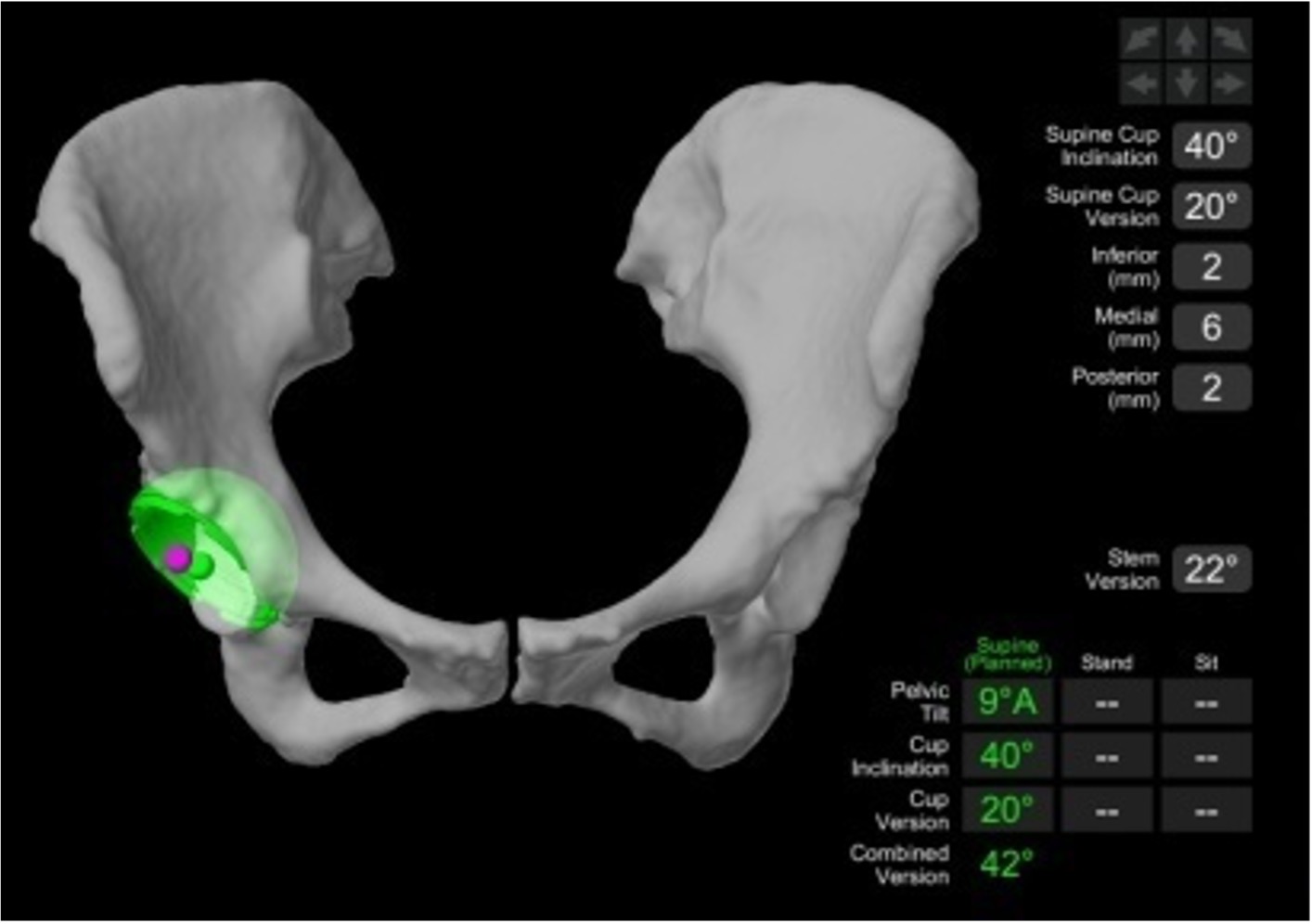
術中虛擬全髖髖臼擺位 / 動態微調
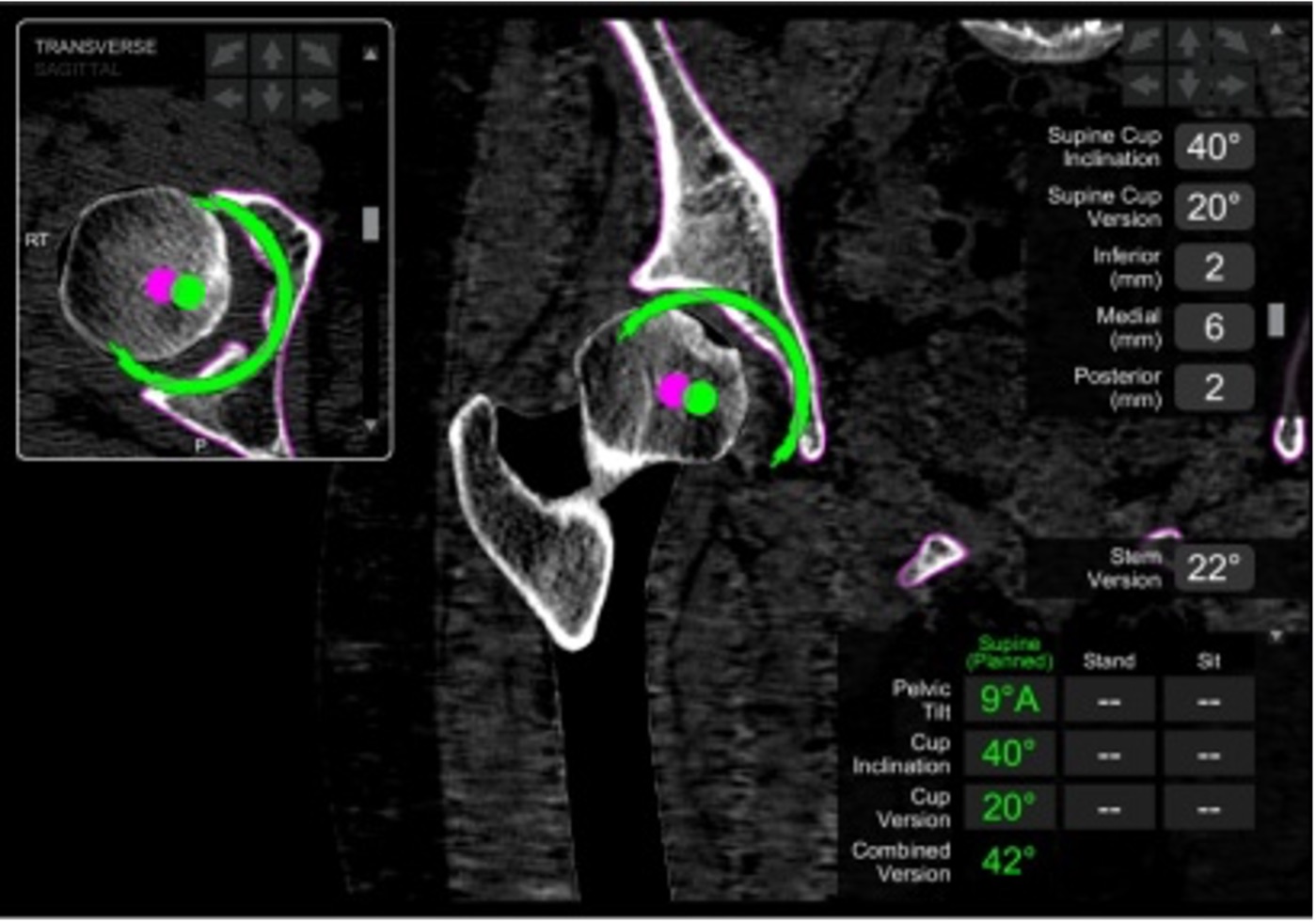
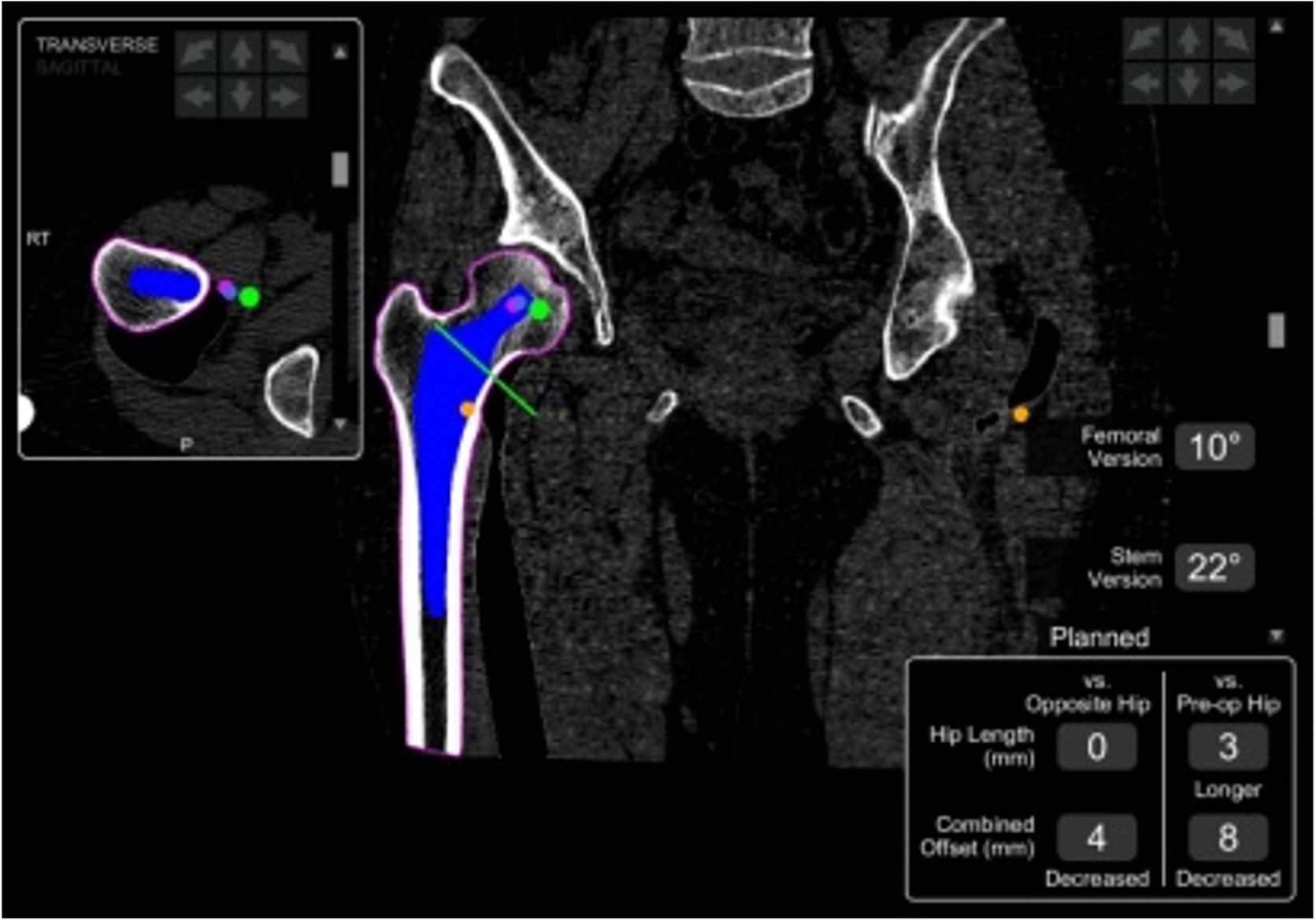
術中虛擬全髖股骨幹擺位 / 動態微調
術中虛擬全髖人工關節術後X光
在傳統手術中,全髖人工關節植入位置落於理想範圍(safe zone)的比例約為50–60%;而在機器手臂輔助手術中,該比例可提升至90%以上,並可能進一步降低翻修手術的發生率。
另一項重要趨勢,是從標準化走向個人化(personalized)治療。
過去全膝人工關節置換多以機械軸線(mechanical alignment, 0°)為原則,強調一致性的標準設定;近年則逐漸發展出功能性擺位(functional alignment)與運動型擺位(kinematic alignment)等概念,強調符合個別患者的解剖與功能特性。
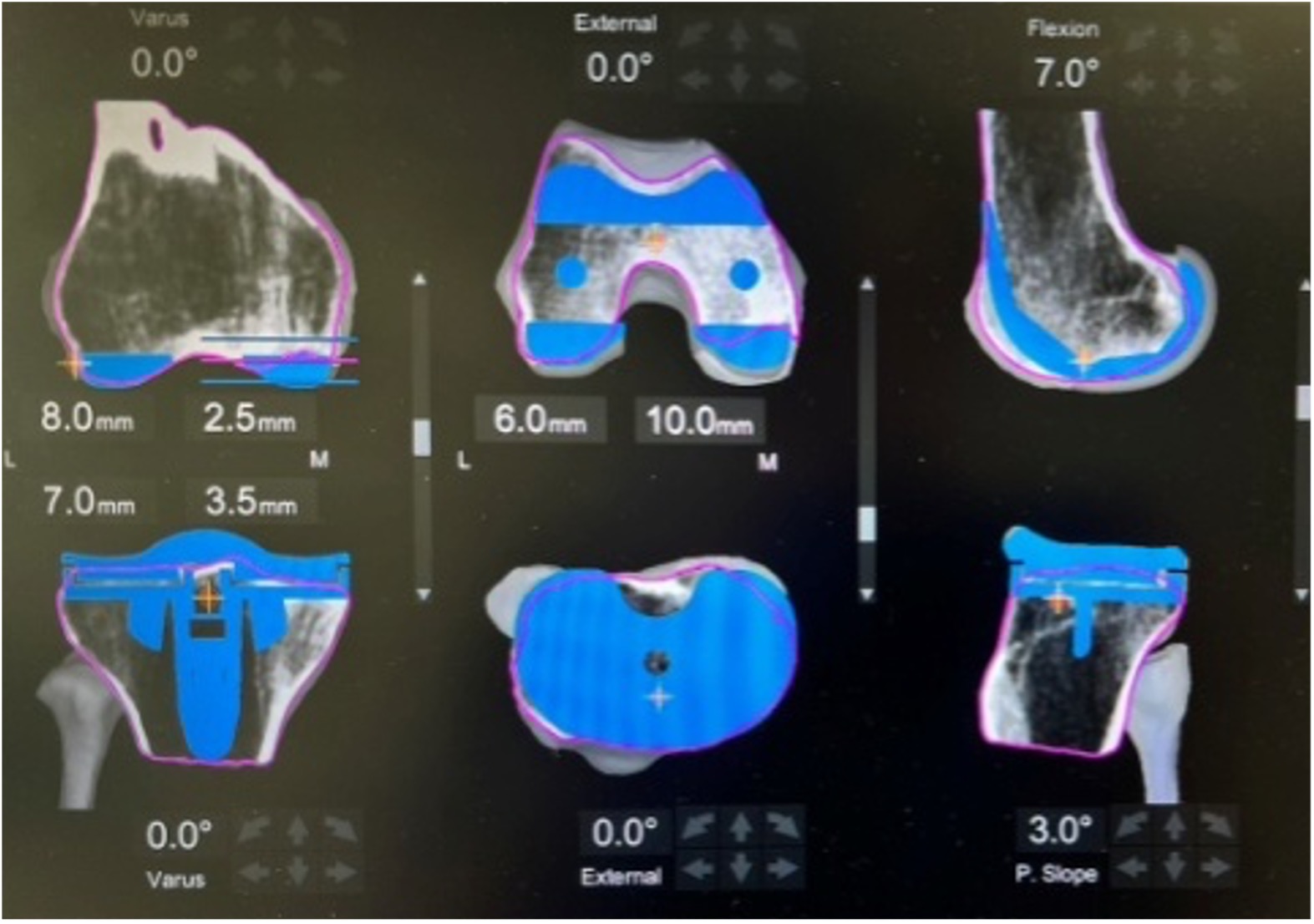
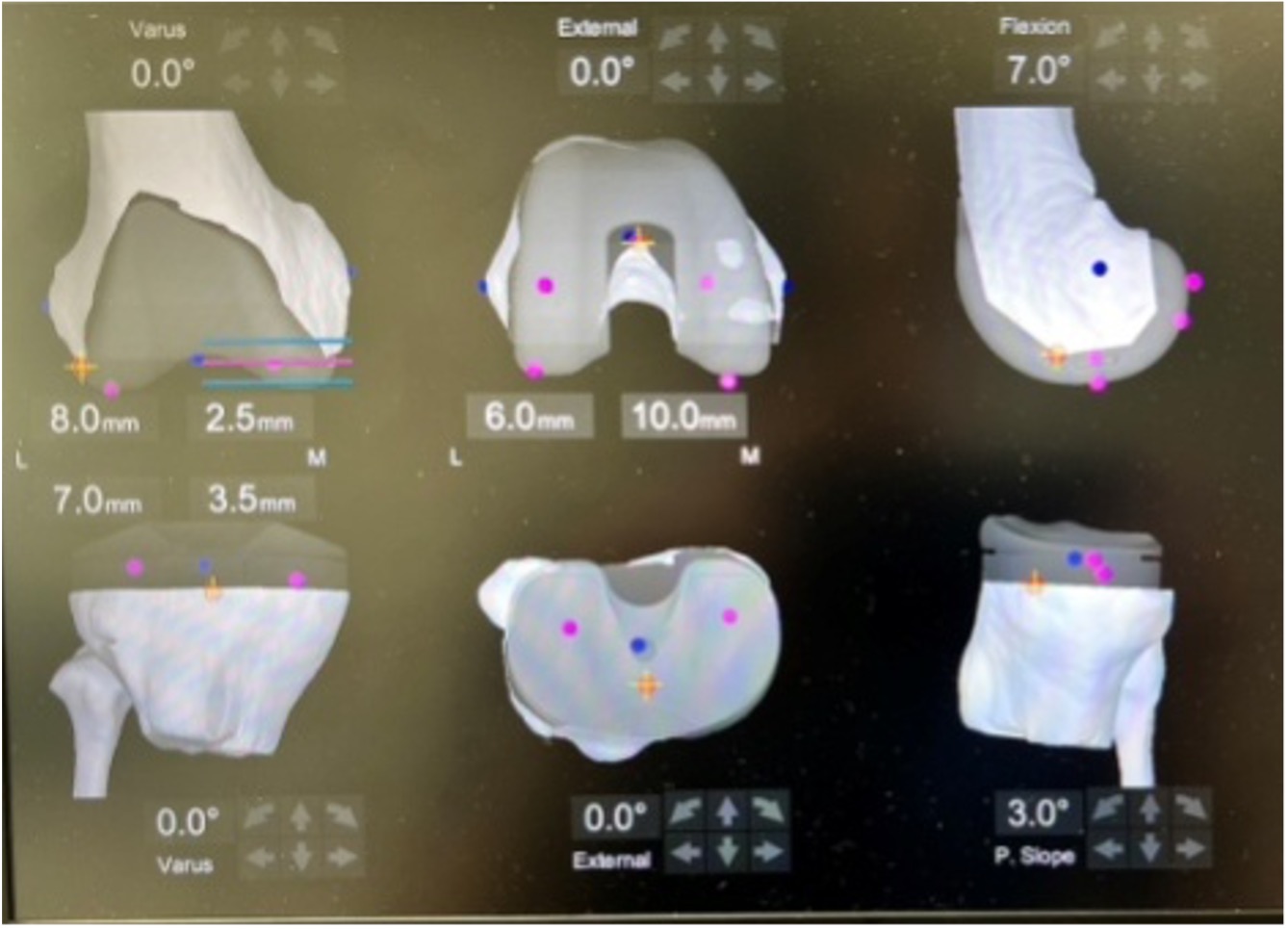
術中虛擬全膝人工關節擺位 / 動態微調
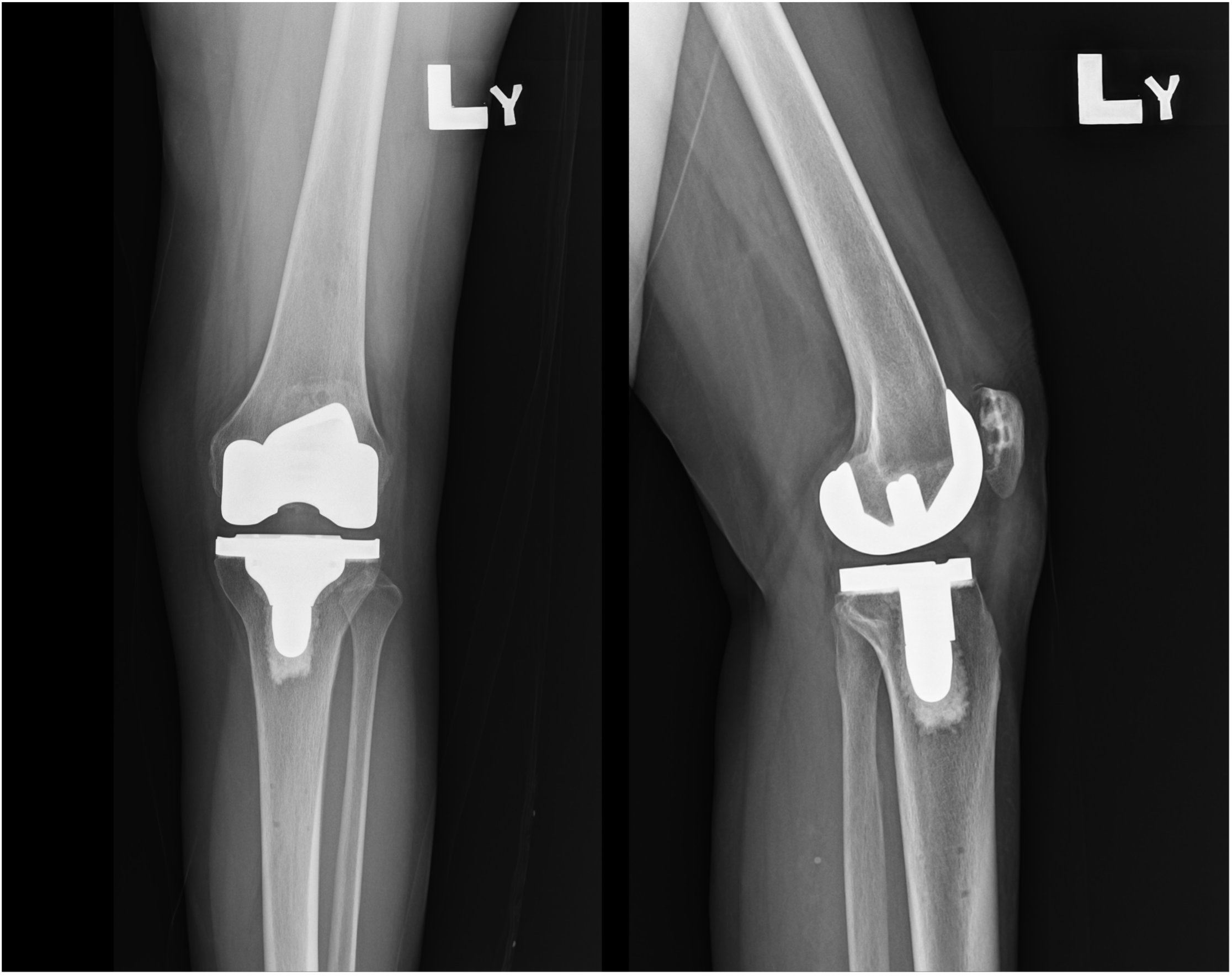
MAKO機器手臂技術的應用,使醫師能根據患者的骨骼形態、軟組織張力與動態表現,設計更符合個體需求的擺位策略。
從臨床結果觀察,機器手臂輔助手術已呈現多項正向趨勢,包括術後疼痛降低、恢復速度提升、住院時間縮短,以及併發症風險下降。在當前強調快速康復與當日出院(same-day surgery)的醫療模式中,「精準」亦逐漸轉化為「安全」的重要指標。
MAKO機器手臂應用在人工關節手術,在全世界已經使用超過100萬個以上的案例,很多高流量關節置換中心已經把這樣的術式標準化。以郵政醫院為例,自2016年起導入MAKO (Stryker, USA) 機器手臂輔助手術,應用於部分膝關節、全膝關節及全髖關節置換,至今已累積近1600例臨床經驗,這項技術已經成為常規手術之一,超過95%的案例均達到良好臨床結果。
在AI的應用逐漸普及於各領域的時代,將此技術導入人工關節置換手術,不僅可協助醫師精確掌握植入物擺位,也能提升手術安全性。由於尺寸選擇、關節壓力與擺位不再僅依賴主觀判斷,手術過程得以透過即時且客觀的數據回饋進行調整,進而有助於延長人工關節的使用年限。
Dr. Kenyoh Chen版權所有05/28/2026
骨科專科醫師
陳健煜
台北郵政醫院院長
台北醫學大學骨科臨床教授
長庚醫院主治醫師
愛荷華大學UIHC骨科研究醫師
機器手臂人工關節重建認證及訓練醫師
1.電腦導航Computer Navigation關節重建
2.AI智能(Mako)機器手臂髖及膝關節重建
3.成人膝 / 髖關節重建
郵政醫院: 台北市福州街14號 0961-360-665 Ms.張
和麗診所: 台北市和平東路1段121號2樓 02-2358-2650
Kenyoh Chen, MD
Taipei Postal Hospital, Director
Orthopedic & General Surgery, Board Certified Taiwan
Spine surgery, Fellowship trained, CGMH & UIHC
Attending Orthopedic Surgeon CGMH
Clinical professor of Orthopedics TMUH
MAKO Robotic Joint Arthroplasty Specialist & Trainer
1. Computer Navigation Total Knee arthroplasty
2.Mako SmartRobotics Hip & Knee reconstruction
3. Adult knee / hip Joint Reconstruction
Mobile: 0961-360-665 RN. Peggy Chang
Postal H: No. 14, Fuzhou St., Zhongzheng Dist., Taipei City 10078, Taiwan
Herly clinic: 2F., No. 121, Sec. 1, Heping E. Rd., Da'an Dist., Taipei City 106004 , Taiwan
Precision Joint Arthroplasty
From Experience-Driven to Data-Driven Surgery
Orthopedic Surgeon: Dr. Kenyoh Chen
In the past, we often believed that an excellent surgeon was shaped through years of accumulated clinical experience, instinct, and intuition. However, in today’s medical environment, relying solely on experience and subjective judgment is no longer sufficient to fully meet clinical demands. Modern healthcare no longer strives merely for surgeries that are “well performed,” but rather aims for procedures that consistently and predictably achieve optimal outcomes.
From a fundamental perspective, conventional joint replacement surgery still involves several variables.
First is the issue of accuracy. Traditional procedures rely on the surgeon’s visual estimation and tactile feedback, which may result in deviations of 20~30% in size, alignment, and positioning, with angular errors sometimes exceeding 5-7°.
Second, soft tissue management is highly dependent on the surgeon’s individual experience. Ligament balancing is largely based on subjective assessment and tactile feedback, whereas robotic-assisted surgery provides precise intraoperative data feedback to minimize such variability.
When deviations (outliers) exceed ±5°, they are often associated with suboptimal clinical outcomes and an increased risk of revision surgery.
Therefore, the true clinical priority is not only improving overall average performance, but more importantly, effectively reducing these critical outliers.
MAKO Robotic-Arm Assisted Arthroplasty
Precision medicine is generally built upon three core principles: measurability, predictability and reproducibility.
The introduction of the MAKO robotic system and computer navigation has enabled the gradual implementation of precision medicine in joint arthroplasty.
From a technical perspective, computer navigation primarily utilizes infrared or imaging-based tracking systems to assist with positioning, while the surgeon still performs the procedure manually. In contrast, robotic systems integrate preoperative 3D modeling with intraoperative safety control mechanisms, allowing surgeons to execute precise bone preparation based on data-driven planning.
The key features can be summarized into three main aspects:
Preoperative 3D planning
Provides a basis for optimal implant positioning, appropriate sizing, and ideal alignment
Dynamic joint balancing
Offers real-time intraoperative feedback on joint pressure and motion, enabling quantifiable soft tissue balancing
Safe-zone boundary (haptic boundary)
Restricts the bone resection area to prevent injury to surrounding soft tissues (such as nerves and blood vessels)
During the preoperative phase, imaging is used to construct a three-dimensional model of the patient—essentially creating a “digital twin.” This allows surgeons to simulate implant selection, positioning, and joint balance in advance, enabling personalized surgical planning.
3D CT modeling / Digital Twin
Digital Twin / Fine-tuning
During the intraoperative phase, the system provides real-time data feedback, including joint kinematics, alignment adjustments, and soft tissue tension assessment, shifting surgical decision-making from subjective experience to objective, data-driven guidance.
Additionally, haptic boundary control technology provides precise constraints during bone resection, preventing deviation beyond the predefined plan. Its purpose is not to replace the surgeon, but to provide an added layer of safety during critical steps and reduce technical errors.
Ideal implant positioning is not only an intraoperative metric but also directly affects implant wear, loosening, joint stability, and even the risk of dislocation (particularly in total hip arthroplasty, where MAKO has already become standardized in some international joint centers).
Optimal cup sizing and positioning
Optimal stem sizing and positioning
Virtual postoperative X-ray
In conventional surgery, only about 50–60% of total hip implants fall within the ideal “safe zone.” With robotic-assisted surgery, this proportion can exceed 90%, potentially reducing the incidence of revision procedures.
Another important trend is the transition from standardization to personalized treatment.
Traditionally, total knee arthroplasty has followed the principle of mechanical alignment (0°), emphasizing uniformity. In recent years, concepts such as functional alignment and kinematic alignment have emerged, focusing on restoring patient-specific anatomy and function.
3D CT modeling / Digital Twin
The application of MAKO robotic technology allows surgeons to design alignment strategies tailored to each patient’s bone morphology, soft tissue tension, and dynamic characteristics.
From a clinical outcomes perspective, robotic-assisted surgery has demonstrated several positive trends, including reduced postoperative pain, faster recovery, shorter hospital stays, and lower complication rates. In the current healthcare model emphasizing rapid recovery and same-day surgery, “precision” is increasingly being translated into “safety.”
The MAKO robotic system has been used in over one million joint replacement procedures worldwide, and many high-volume joint replacement centers have standardized this approach. At Postal Hospital, for example, MAKO (Stryker, USA) has been implemented since 2016 for unicompartmental knee arthroplasty, total knee arthroplasty, and total hip arthroplasty. To date, nearly 1,600 cases have been accumulated, and this technique has become a routine surgical option, with over 95% of cases achieving favorable clinical outcomes.
As artificial intelligence becomes increasingly integrated across various fields, incorporating this technology into joint replacement surgery not only enhances the accuracy of implant positioning but also improves surgical safety. With implant sizing, joint pressure, and alignment no longer relying solely on subjective judgment, intraoperative adjustments can be guided by real-time, objective data—ultimately contributing to extended implant longevity.
Kenyoh Chen, MD
Taipei Postal Hospital, Director
Orthopedic & General Surgery, Board Certified Taiwan
Spine surgery, Fellowship trained, CGMH & UIHC
Attending Orthopedic Surgeon CGMH
Clinical professor of Orthopedics TMUH
Mobile: 0961-360-665 RN. Peggy Chang
Postal Hospital: No. 14, Fuzhou St., Zhongzheng Dist., Taipei City 10078, Taiwan
Herly clinic: 2F., No. 121, Sec. 1, Heping E. Rd., Da'an Dist., Taipei City 106004 , Taiwan
MAKO Robotic Joint Arthroplasty Specialist & Trainer
1. Computer Navigation Total Knee arthroplasty
2. Mako SmartRobotics Hip & Knee reconstruction
3. Adult knee / hip Joint Reconstruction